2026-10-03
<Shinyu Breast Clinic> Causes and Solutions for Upper Pole Fullness After Breast Reconstruction!
Understand why upper pole fullness happens after breast reconstruction, how submuscular placement and tissue coverage resolve it, and the recovery timeline.
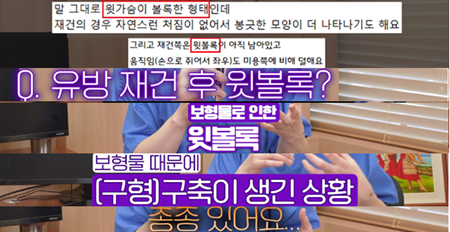
It literally means the upper breast appears bulging or excessively full.
In reconstruction, because there is no natural ptosis (sagging),
the rounded, protruding shape can be even more noticeable.
Also, with reconstruction, upper pole fullness can persist longer,
and mobility (moving side-to-side when held by hand) is less than in purely cosmetic surgery.
<< Upper Pole Fullness After Breast Reconstruction? >>
Bulging caused by the implant itself,
or situations where capsular contracture has developed due to the implant,
are seen quite often.....
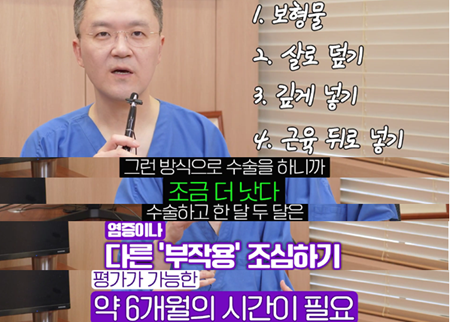
Covering the implant
with sufficient soft tissue,
placing it deeply,
and placing it behind the muscle
—performing the surgery in this manner
yields much better results.
For the first month or two after surgery,
be careful of inflammation and other "side effects."
To properly evaluate the final result,
about 6 months of time is needed!
Frequently Asked Questions
Why does upper pole fullness occur after breast reconstruction?
The primary causes are a lack of natural breast ptosis, the implant itself, or capsular contracture. Compared to cosmetic breast augmentation, reconstructed breasts have less tissue mobility and less natural sag, making the upper chest appear more prominently rounded and projected.
What surgical methods can help alleviate upper pole fullness after reconstruction?
Techniques such as placing the implant submuscularly (deep behind the muscle) or providing adequate soft tissue coverage can be utilized. Ensuring the implant is well-covered with tissue and positioned deeply behind the muscle helps reduce excessive bulging in the upper breast area.
When can the final outcome of upper pole fullness after breast reconstruction be evaluated?
An accurate evaluation is possible around 6 months post-surgery. During the first one to two months, close monitoring is required to prevent side effects such as inflammation, and at least 6 months are needed for the tissues to stabilize before making a definitive assessment of the breast contour.
What precautions should be taken in the early period following breast reconstruction surgery?
During the first 1 to 2 months post-op, special care must be taken to prevent inflammation and other complications. Because the body is still in the active recovery phase right after surgery, careful management is essential to avoid infection or adverse reactions, after which changes in shape should be observed gradually over time.